Counter Block
Strokes

Levi Olukayode Afolayan Asked 6 months ago
Good morning dear Coaches Alois and Jeff. Happy 2026 to you both.
1. Please can explain to me what counter blocking is all about, how to effectively execute it and the most appropriate time to do whilst playing against an opponent?
2. I was told by an advanced player that I habitually raise up my non playing arm's shoulder ( left shoulder) whilst playing. I confirmed it by making a video of myself whilst playing. He said it has negative impact on my game. Please how can I stop it and get my rhythm correct?
Thank you.

 Alois Rosario Answered 6 months ago
Hi Levi,
Happy 2026.
-
Counter blocking is an active block, not just holding the bat still. You take the ball early, right after the bounce, with a slightly closed bat and a short forward motion. The aim is to use the opponent’s speed and add a little of your own to place the ball wide or deep. It works best when you are close to the table, balanced, and the ball is coming fast enough that a full topspin would be risky.
-
Raising the non playing shoulder usually creates tension and throws off balance and timing. It often comes from trying too hard with the upper body. To fix it, focus on keeping both shoulders relaxed and level at ready position. Actively let the non playing arm stay loose and slightly forward for balance. Shadow play in front of a mirror or slow multiball while consciously dropping that shoulder helps retrain the habit. Think relaxed shoulders, power from legs and waist, not from lifting the upper body. You can even put your free hand behind your back for a little while and see the effect it has. Then take it out and see if you can maintain the relaxed non playing arm.
Question actions
Recommended Video
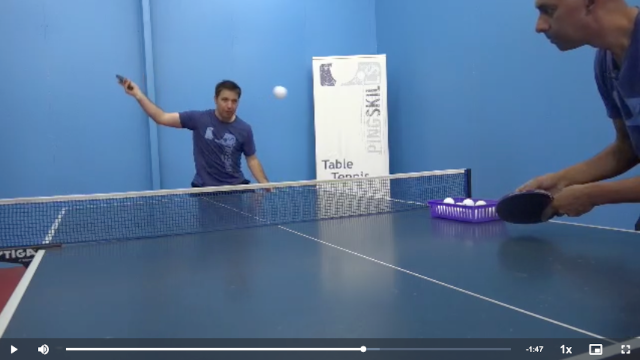
Backhand Slow Spinny Topspin
The backhand slow spinny topspin can be really useful especially against a blocker who likes the ball coming fast to them.
Watch NowNo comments yet!
Become a free member to post a comment about this question.