Backhand problem
Strokes

Sameera P K Asked 11 years ago
Hello sir,
I have been playing tt for around 3 years. But the days are not the same with my playing style. I am mainly concerned about my backhand. When my opponent topspins the ball during a training session where i am supposed to block, I am able to block some 5-6 balls but for the next balls, even though my hand is still, the ball just kicks off or drops into the net. I am not able to understand why this happens. This is the major reason for my losses in tournaments. I am not able to control the loop on my backhand side. I also try to close the angle of my racket. Still the ball pops off the table. So,i just wanted to know the main principle for learning the backhand block on a consistent basis.
Also should we point our index finger downwards while playing any backhand stroke because i notice all the players dropping their index finger downwards while playing the backhand.
So,I kindly request you to shed more light on playing this stroke with more consistency.....
Best site on the web for learning table tennis.

 Alois Rosario Answered 11 years ago
Hi Sameera,
Thanks for your kind words about the site.
Blocking is a lot about the angle of your racket. You need to adjust this slightly with each stroke depending on the amount of spin and speed on the topspin coming to you. This understanding comes best with more training. The more spin or speed the more you close your bat over.Take a look at our lesson no the Backhand Block which will help as well. The index finger should stay across the bottom of the rubber when you are playing all of your strokes.
Question actions
Recommended Video
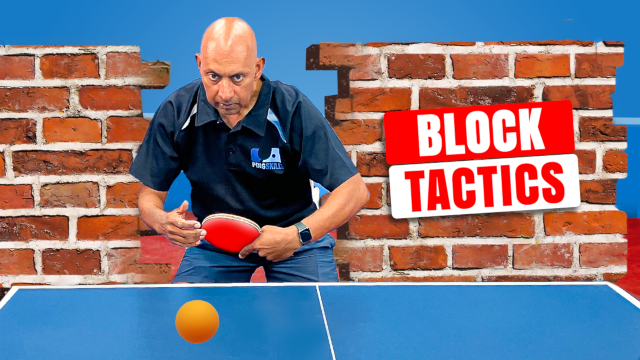
Why Blocking Is the Most Underrated Shot in Table Tennis
Blocking might not be flashy, but it wins points — especially against fast attackers. In this episode of the PingSkills Show, we reveal why blocking is one of the most underrated skills in table tennis — and how you can master it.
🧠 Skill Spotlight – Discover the importance of the block in table tennis.
⚡ Fix It Fast – Quick solutions to the most common blocking mistakes.
❓ Ask the Coach – Your questions answered on blocking angles, timing, and control.
📈 Train Smarter – Drills and training tips to help you improve your block under pressure.
No comments yet!
Become a free member to post a comment about this question.