What are some tips for a player with limited footwork? I've got a long term hip injury, so I can only walk and bend towards the ball, not dash or run. It's especially hard when the opponent hits wide deep balls from side to side. If I remember correctly, one of you have trained wheelchair players for the paralympics so I thought that this would be the perfect place to ask my question!
Playing Table Tennis with Limited Movement: What Really Helps?
Strategy

Axel Alpadie Asked 11 months ago
Video Answer
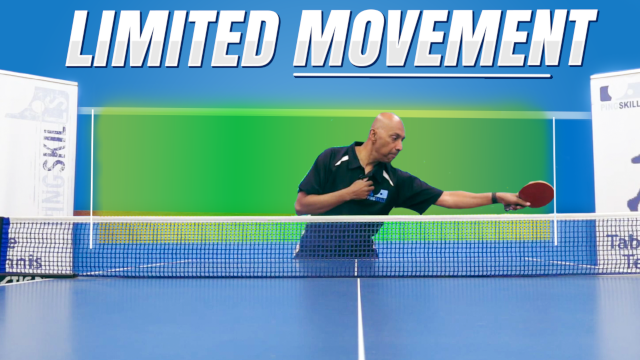
We have filmed a video answer to this question. To watch it you need to be a Premium member. Premium unlocks every video we've ever made, a monthly Video Coaching review with personal feedback from our coaches, and full access to Vault for tracking your opponents and matches.

 Alois Rosario Answered 11 months ago
Hi Axel,
You’re remembering right — coaching para players gives a lot of insight into how to adapt when mobility is limited. If you can’t dash or cover wide angles quickly, the key is to shift the game so that you control where the ball goes rather than being forced to chase. A few practical ideas:
-
Placement first, not power
Don’t try to out-hit opponents. Place the ball in ways that reduce their ability to open the angles — deep into the crossover (elbow area), or to the same corner several times, instead of giving them the chance to pull you side to side. -
Serve strategy
Serve short or into awkward placements (like fast into the body) so you control the third ball. If you serve long and wide, you invite angles you can’t chase. -
Early preparation
Since you can’t move explosively, prepare the racket and body early for each shot. That way, when the ball comes to you, you’re ready and don’t need the extra time footwork would normally buy. -
Compact strokes
Short, controlled swings let you adjust from your current position without needing to move much. -
Reading and anticipation
This becomes your “replacement footwork.” Watch the opponent’s body, racket angle, and timing so you can anticipate where the ball is going a fraction earlier. If you can shift your torso or lean in the right direction sooner, you’ll cover more than you expect.
Many para players (and also players with joint injuries) win by controlling the geometry of the rally rather than raw movement. If you limit your opponent’s options, you don’t need to run.
Question actions
Recommended Video

When to Use Your Best Serve in Table Tennis (Most Players Get This Wrong!)
A lot of players don’t use their best serve enough — or worse, they use it at the wrong time. In this video, Jeff and Alois break down how to make smarter decisions about when to use your strongest serve and how to adjust based on your opponent, the score, and the pressure.
✅ What you’ll learn:
- Why holding back your best serve can hurt your game
- How to recognise the right moment to use it
- What mistakes players make with serve selection
- A 3-step routine to improve your serve strategy
Your best serve should win you more than just a few points — it should help you win matches.
Watch Now
Thoughts on this question (1)
Great advice. I have two bad knees which limits my movement and weight transfer. Have copied and printed Alois's answer. Thank you!
Become a free member to post a comment about this question.