Generating Power On The FH Loop Versus Block
Strokes

Daniel Ring Asked 11 years ago
Hi Coaches,
My question is a little bit more technical than most of the questions you probably get, but some things have been really bugging me lately. What I would like to know is the following:
When you reach the end of your backswing on a FH loop versus block, how do you initiate the forward movement into the ball? Do you consciously PUSH against the floor with your right foot, or do you simply turn at the hips and waist (or "firing" the hips let's say) to generate the forward motion into the ball?
Also, I recently watched a video where Brian Pace made the claim that both feet should be in the air at the moment of contact on a FH loop. However, when I watch Ma Long's training video, it's pretty obvious that he keeps his feet rooted in the ground the whole time when doing a FH loop versus topspin. However, watching him play in a real match... his feet do often come off the floor when he hits the ball. I'm an intermediate player and having a hard time understanding when my feet should leave the floor when looping against topspin...

 Alois Rosario Answered 11 years ago
Hi Daniel,
Initiating the power starts from the ground and with your feet. This then pushes through your legs and waist and body. It is a summation of all of these forces to generate the speed to the ball.
I think your feet should be on the ground when looping. When players get their feet going off the ground is when they are really going after it and especially on the pivot ball when they are committing to hitting a winner. Their body is still low to the ground with their legs really well bent.
Most of the time their feet stay on the ground when playing the stroke.
Question actions
Recommended Video
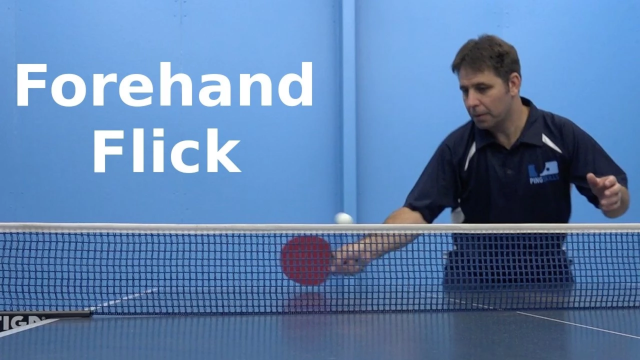
Forehand Flick
When your opponent plays a short ball to your forehand, you can play an attacking stroke by using the flick. This stroke is also known as the flip.
Watch Now
No comments yet!
Become a free member to post a comment about this question.